!Side Menu Logo

!Request Appointment Button

!Header Logo
Autumn Yard Hazards for Burlington Dogs: Mushrooms, Mould and Leaf Piles
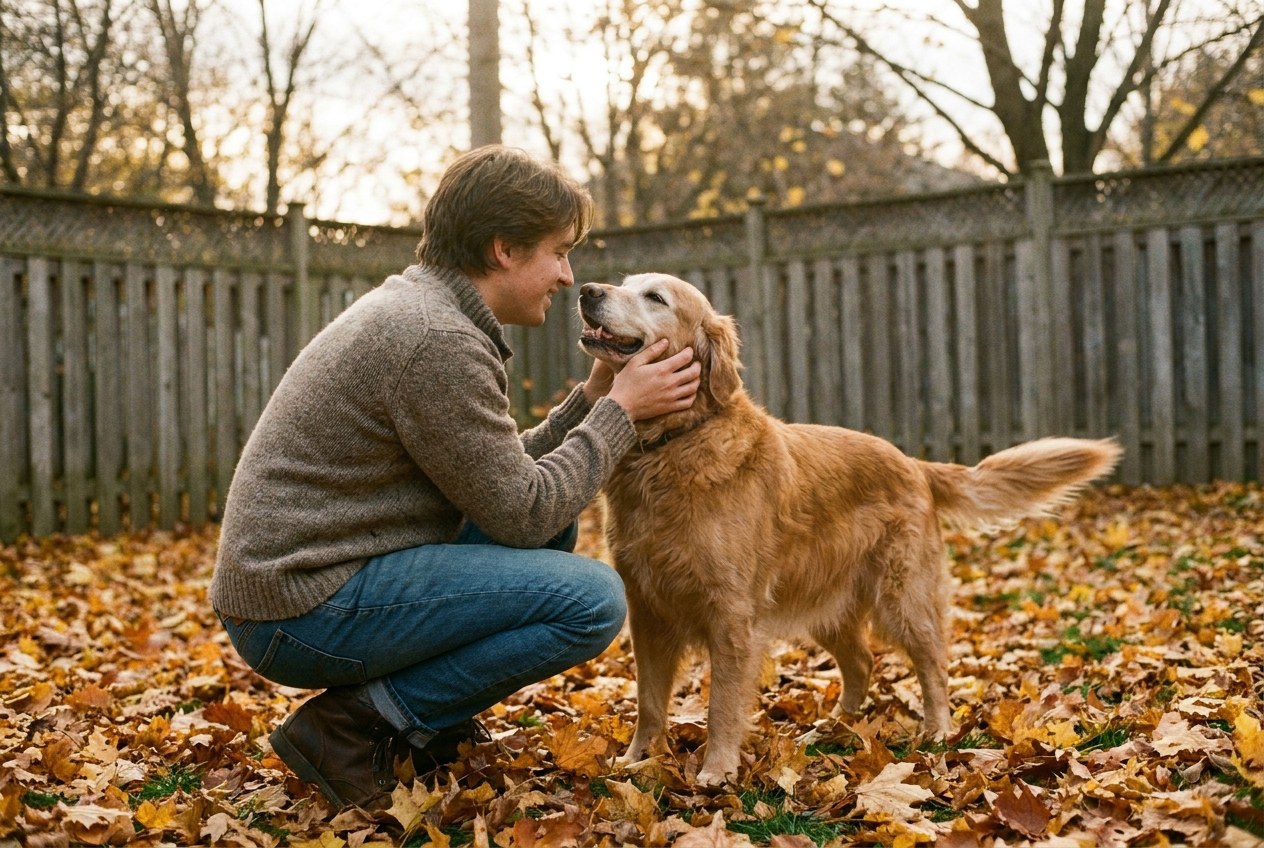
A caller reached the front desk on a grey Tuesday, a little out of breath. Her retriever had nosed something out from under the wet leaves along the back fence and swallowed it before she could get there.
Was it a mushroom, a chunk of bark, or an acorn? That uncertainty is the whole problem with autumn yards.
By late October, the cool, damp weather that turns the Brant Street maples gold also lets mushrooms fruit and mould bloom on forgotten leaf piles. We field more of these “what did my dog just eat” calls in fall than almost any season.
The most common fall yard hazards for dogs in Burlington are toxic wild mushrooms, mould in compost and decaying leaves, acorns, cocoa mulch, and ticks sheltering in leaf litter. According to the ASPCA, wild mushrooms are notoriously difficult to identify, even for experts, and toxic species can cause severe illness in dogs.
If this is happening right now and your dog has eaten a mushroom, mouldy food, or something unknown from the yard, call us at (905) 336-4002. You can also reach the Pet Poison Helpline at 855-764-7661 or the ASPCA Animal Poison Control Center at (888) 426-4435. Outside our hours, use our after-hours care guidance to find the nearest emergency hospital.
Are the mushrooms growing in my yard poisonous to my dog?
Some are, and the hard truth is you usually can’t tell a safe mushroom from a deadly one by looking. According to the ASPCA, wild mushrooms are notoriously difficult to identify even for experts, so it’s best to leave that job to trained mycologists rather than guess in the backyard.
Southern Ontario’s damp autumn is prime mushroom weather.
The Merck Veterinary Manual lists several mushrooms that contain amatoxins, among them Amanita phalloides (the death cap), Amanita ocreata, Amanita bisporigera, Galerina marginata, Lepiota species, and Conocybe filaris. The same source notes that a single mushroom cap can hold a lethal dose for an animal or a person.
Pet Poison Helpline calls the death cap one of the most dangerous fall mushrooms. Our team treats every unknown mushroom a dog eats as a reason to call, not to wait and watch.
What are the symptoms of mushroom poisoning in dogs, and how fast do they show up?
Signs depend on the species, and they can be severe. According to Pet Poison Helpline, death cap ingestion can cause vomiting, diarrhea, abdominal pain, depression, tremors, and seizures, with liver and kidney damage following later, while the ASPCA adds that toxic mushrooms can cause trouble breathing, organ damage, and even death.
What makes amatoxin mushrooms so deceptive is the delay. The Merck Veterinary Manual describes a latent period of roughly 6 to 12 hours after ingestion when the dog shows no signs at all.
Then come gastrointestinal signs, followed by an apparent “false recovery” phase where the dog seems to bounce back. According to the same source, liver and kidney failure can set in 36 to 72 hours after ingestion, leading to recovery or death within 7 to 14 days.
That timeline is exactly why “he seems fine now” is not reassurance with mushrooms. We’d rather see a dog early and run diagnostics to check how the liver and kidneys are holding up.
Can mould in my compost pile make my dog sick?
Yes, and it can happen fast. According to Pet Poison Helpline, decomposing organic matter and moulding food in a backyard compost pile can contain tremorgenic mycotoxins, meaning moulds that cause tremors, and even small amounts can produce tremors or seizures within 30 minutes to several hours.
As gardens wind down across Burlington and Halton, kitchen scraps and clippings rot, and that decay is where mould grows.
Pet Poison Helpline’s mould guidance lists vomiting, agitation, incoordination, tremors, seizures, and elevated body temperature, and notes symptoms can appear quickly and last 24 to 48 hours.
A veterinary case report on NCBI documented a dog that ate overripe bananas from a garden compost pile and had seizures within about half an hour. Its vomit tested positive for penitrem A and roquefortine C from Penicillium mould, and the dog recovered within 24 hours of intensive care.
Keep compost in a sealed, dog-proof bin, and don’t toss mouldy leftovers where a curious nose can reach them.
Why are leaf piles dangerous for dogs in the fall?
A damp leaf pile is more than a mess; it’s a warm, moist spot where mould grows and ticks shelter. According to the Government of Ontario, blacklegged ticks hide in leaf litter, brush, and weeds at the edge of the lawn, the same yard debris owners rake up each autumn.
A pile that’s sat through a few rainy Burlington weeks stays damp underneath and breaks down. That decay grows the same mould flagged in compost, and it can hide sharp sticks, acorns, and food scraps a dog might swallow.
Then there are ticks. Halton Region says all of Halton is an established tick risk area and recommends removing that leaf litter, brush, and weeds to cut tick numbers.
So enjoy the leaves, but bag them promptly and check your dog over afterward.
Are acorns poisonous to dogs?
They can be. According to the Merck Veterinary Manual, acorns and oak contain tannins that are toxic to dogs, and dogs can develop kidney failure and liver damage after eating them, with some signs coming from a physical intestinal blockage the acorns cause.
Oak trees are common across older Burlington neighbourhoods, and a windy fall day can carpet a yard in acorns overnight.
The Merck Veterinary Manual points to two problems: the tannins, which it links to kidney failure and liver damage, and a physical blockage in the gut when a belly fills with acorns.
If your dog is vomiting repeatedly, straining, or off their food after eating acorns, that’s a call-us situation. Raking under oak trees helps prevent a repeat.
Is cocoa mulch safe to use if I have a dog?
Be cautious. According to the AVMA, cocoa bean mulch contains theobromine and caffeine, the same methylxanthines found in chocolate, and in an ASPCA Animal Poison Control Center case series cited by the AVMA, vomiting and muscle tremors were the most common signs after dogs ate it.
Cocoa mulch smells like chocolate, which is precisely the problem. That sweet scent draws dogs toward the same toxic compounds that make chocolate dangerous.
The AVMA also reports increased heart rate, hyperactivity, and diarrhea. Because of that risk, the ASPCA recommends avoiding cocoa bean shell mulch where unsupervised dogs can reach it, or using it cautiously around dogs with indiscriminate eating habits.
For most Burlington yards with a dog, we suggest a dog-safe alternative like plain cedar or pine mulch instead.
Do dogs still need tick prevention in the fall?
Yes, and this surprises a lot of owners. According to the Government of Ontario, blacklegged ticks are most active in spring and summer but can be found any time of year when the temperature is above freezing (0 degrees C), so mild Burlington Octobers and Novembers keep that risk alive well past summer.
Fall is not an “off season” for ticks in Halton. They stay active on the 5 or 10 degree afternoons common here into November, waiting in the leaf litter owners spend the season clearing.
Local green spaces like the Niagara Escarpment trails, Bronte Creek, and the Sixteen Mile Creek corridor are classic tick habitat. The Government of Ontario notes that most Lyme disease symptoms in people appear between 3 and 30 days after a bite from an infected blacklegged tick, which is why prompt removal matters through the fall.
Year-round parasite prevention is the simplest protection, and it’s something we build into every wellness visit. Run a hand over your dog after a walk near the escarpment until the ground freezes.
Fall yard hazards at a glance
| Hazard | Why it’s risky | Source |
|---|---|---|
| Wild mushrooms (e.g. death cap) | Hard to identify; can cause vomiting, seizures, liver and kidney damage, or death | Pet Poison Helpline; ASPCA; Merck Veterinary Manual |
| Compost and mouldy food | Tremorgenic mycotoxins can cause tremors or seizures within 30 minutes to several hours | Pet Poison Helpline; NCBI case report |
| Damp leaf piles | Harbour mould and shelter blacklegged ticks | Pet Poison Helpline; Government of Ontario; Halton Region |
| Acorns and oak | Tannins toxic to dogs; risk of intestinal blockage | Merck Veterinary Manual |
| Cocoa bean mulch | Contains theobromine and caffeine; vomiting and tremors most common signs | AVMA (ASPCA case series) |
| Ticks in yard debris | Active above 0 degrees C; carry Lyme disease | Government of Ontario; Halton Region |
Frequently asked questions
What should I do if my dog eats a wild mushroom?
Call us right away at (905) 336-4002, and don’t wait for symptoms. According to the ASPCA, toxic mushrooms are hard to identify and can cause serious illness, so early action matters. If you can, safely bag a sample or photograph the mushroom from the same patch to help identify it.
How quickly do mushroom or mould toxins affect a dog?
It varies by toxin. Pet Poison Helpline notes that tremorgenic mycotoxins from mould can cause tremors or seizures within 30 minutes to several hours. Amatoxin mushrooms are trickier: the Merck Veterinary Manual describes a 6 to 12 hour latent period with no signs, which is exactly why “he seems fine” is not reassurance.
Are acorns dangerous even in small amounts?
We’d rather not guess at a safe number, so we treat any acorn eating as worth a call. According to the Merck Veterinary Manual, oak and acorns contain tannins toxic to dogs and can cause kidney failure and liver damage, and a belly full of acorns can also cause a physical intestinal blockage. If your dog has eaten acorns and seems unwell, call us at (905) 336-4002.
Is cocoa mulch really that risky for dogs?
It can be, because it draws dogs in with a chocolate-like scent. According to the AVMA, cocoa bean mulch contains theobromine and caffeine, and vomiting and muscle tremors were the most common signs in an ASPCA case series. A dog-safe mulch such as cedar is a simpler choice.
Do I need tick prevention for my dog in October and November?
Yes. The Government of Ontario states blacklegged ticks can be active any time the temperature is above freezing, and Halton Region classifies all of Halton as an established tick risk area. Mild Burlington falls keep ticks going long after summer ends.
How do I make my backyard safe for my dog in autumn?
Bag leaves promptly instead of letting piles rot, keep compost in a sealed bin, rake up acorns under oak trees, and choose a dog-safe mulch. Halton Region also recommends removing leaf litter, brush, and weeds to reduce ticks. A daily walk-through of the yard catches new mushrooms before your dog does.
This article is educational and isn’t veterinary advice or a substitute for an exam. If you’re worried about your pet right now, call us at (905) 336-4002 or your nearest emergency veterinary hospital.
If your dog got into something in the yard and you’re not sure how worried to be, we’d rather hear from you sooner than later. Our team on Brant Street is happy to talk it through and get you in.
Sources
Mushrooms
- Pet Poison Helpline. “Fall Toxins Poisonous to Dogs & Cats.” https://www.petpoisonhelpline.com/pet-owners/seasons/fall-toxins-poisonous-to-dogs-cats/
- ASPCA. “Fungus Among Us: Mushroom Toxicosis.” https://www.aspca.org/news/fungus-among-us-mushroom-toxicosis
- Merck Veterinary Manual. “Poisonous Mushrooms.” https://www.merckvetmanual.com/toxicology/poisonous-mushrooms/toxin-latent-period-6-hours-after-ingestion-of-mushrooms
Mould and compost
- Pet Poison Helpline. “Mold and Dogs.” https://www.petpoisonhelpline.com/pet-tips/mold-and-dogs/
- Veterinary case report: tremorgenic mycotoxicosis (penitrem A and roquefortine C) in a dog. NCBI/PMC. https://pmc.ncbi.nlm.nih.gov/articles/PMC10828776/
Acorns and mulch
- Merck Veterinary Manual. “Quercus (Oak) Poisoning in Animals.” https://www.merckvetmanual.com/toxicology/quercus-poisoning/quercus-poisoning-in-animals
- American Veterinary Medical Association. “Danger to dogs of cocoa bean mulch put in perspective.” https://www.avma.org/javma-news/2006-06-01/danger-dogs-cocoa-bean-mulch-put-perspective
Ticks and Lyme disease
- Government of Ontario. “Tick-borne diseases.” https://www.ontario.ca/page/tick-borne-diseases
- Halton Region. “Lyme Disease.” https://www.halton.ca/for-residents/immunizations-preventable-disease/diseases-infections/lyme-disease
Emergency contacts
- ASPCA Animal Poison Control Center: (888) 426-4435. https://www.aspca.org/pet-care/animal-poison-control
Autumn Yard Hazards for Burlington Dogs: Mushrooms, Mould and Leaf Piles

My Dog’s Eye Is Red or Swollen: A Burlington Vet on Eye Emergencies